Silicone Roof Coating
The usual topcoat where water sits near drains after storms.
Silicone coating
Spray Foam Roofing
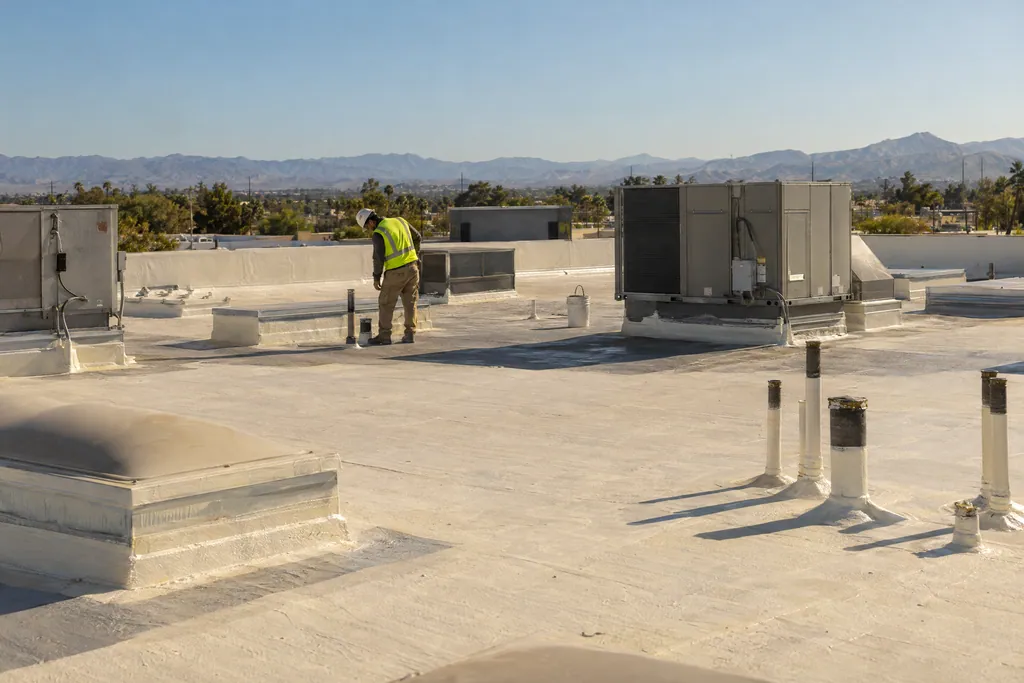
As a Glendale spray foam roofing contractor, we spray insulating foam over dry, firm commercial roofs and seal it with a protective topcoat.
Is This Roof A Fit?
A Glendale spray foam roofing contractor checks dryness and adhesion first. These lists show how foam fits.
Roof Conditions
Foam roofs show wear their own way. These are the checks on existing foam and on roofs being prepped for it. Catching them early keeps the foam itself in service.
Your Options
Foam projects differ in what the foam goes over and which topcoat seals it.
| Option | Foam Goes Over | Topcoat |
|---|---|---|
| Recover over an existing roof | Dry, firm membrane or BUR | Silicone or acrylic |
| Foam over metal panels | Cleaned, fastened steel | Silicone or acrylic |
| Tapered foam for drainage | Low areas on a flat roof | Silicone where water sits |
| Foam repair and recoat | An existing foam roof | Fresh topcoat after sanding |
| Partial tear-off and foam | Deck after wet areas come off | Silicone or acrylic |
| Foam with a granule broadcast | Foam topped with coating and embedded granules | Service paths need extra traction and wear |
Why Coat
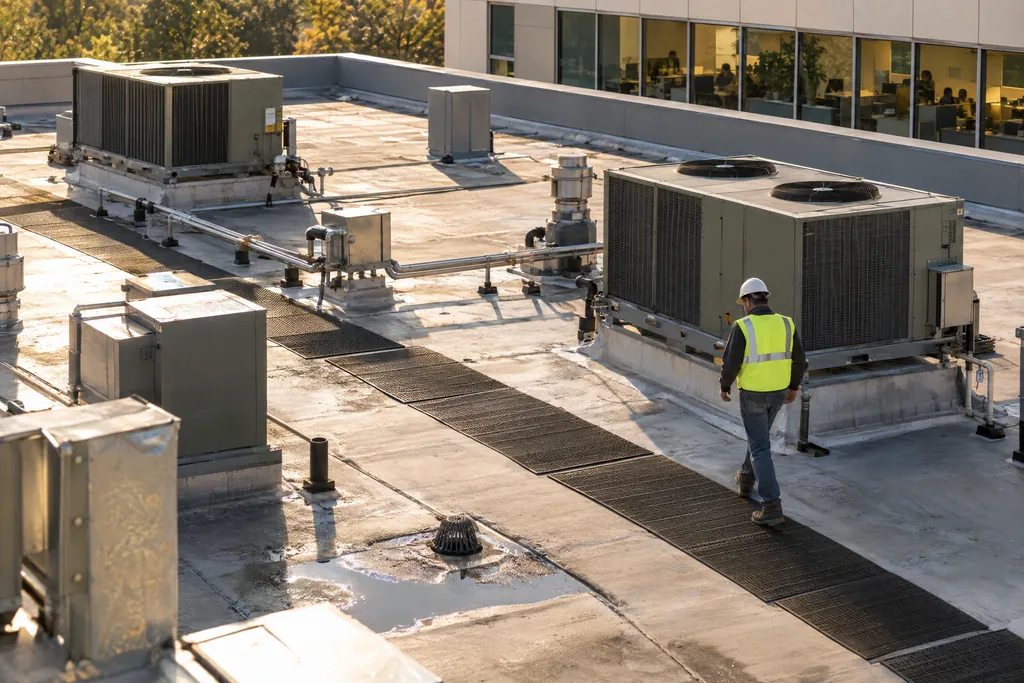
Foam adds insulation that a coating alone cannot.
The foam layer slows heat moving down through the roof deck. Rooms under the roof hold steadier temperatures.
One continuous layer covers old laps and fastener rows. Leaks at old seams and screws end under the foam.
Extra thickness at low spots moves water toward drains. Water moves to drains instead of sitting.
Recovering over a dry roof skips hauling the old roof away. Hauling and disposal drop out of the budget.
New topcoats go over the same foam as the old one wears. Each recoat starts with simple sanding and cleaning.
Call while the damage is still on the surface. Sanding and recoating costs far less than replacing foam.
How It Goes
Foam rises within seconds of spraying. Most of the job is prep and protection around it.
Moisture readings and cores confirm the roof is dry enough for foam to grip. Results are mapped so wet spots get removed.
Soaked insulation, loose gravel, and failed patches come off. The deck is swept clean after removal.
Units, intakes, skylights, and nearby vehicles get covered, and wind is watched all day. Screens go up at roof edges near parking.
Foam goes on in passes, thicker where slope is being built. Thickness is checked with a probe as it rises.
Silicone or acrylic covers the foam right after spraying, before UV reaches it. Topcoat thickness is checked before cleanup.
Related Services
Every foam roof ends with a coating. These pages explain the choices.
The usual topcoat where water sits near drains after storms.
Silicone coatingA lower-cost topcoat for foam with good slope.
Acrylic coatingSteel buildings that skip insulation can take a coating alone.
Metal coatingQuestions
Thickness follows the insulation and slope the roof needs, and it varies where tapering is used. The thickness plan is written into the scope before work starts.
Sometimes. Wind is watched all day, cars are moved or covered, and screens go up at roof edges. A busy section can be saved for a quieter day.
When the existing roof is dry and well attached, it does. Moisture readings and cores confirm that, and wet or loose layers come off first.
It depends on the topcoat type and thickness first applied. Chalking and thin spots are the early signs, well before bare foam shows.
Usually. Spraying happens on the roof, and nearby intakes are shut or masked while foam goes on. Deliveries and entries are planned around the work.
Often. Foam over fastened, cleaned steel adds insulation and covers screw heads. The panels must be tight first, since foam over loose steel cracks.
Foam costs more than a coating alone because it adds the insulating layer. Thickness, tapering, and prep set the price, which the inspection puts in writing.
After the loose gravel is removed and the surface is dry and firm, many built-up roofs can take foam. Cores confirm the layers below are dry before spraying.
Share the roof size and surface, and we will plan the foam thickness.
Leave a name and number, or call (623) 310-0163 now.