Silicone Roof Coating
Roofs with lasting puddles near drains do better under silicone.
Silicone coating
Acrylic Roof Coating
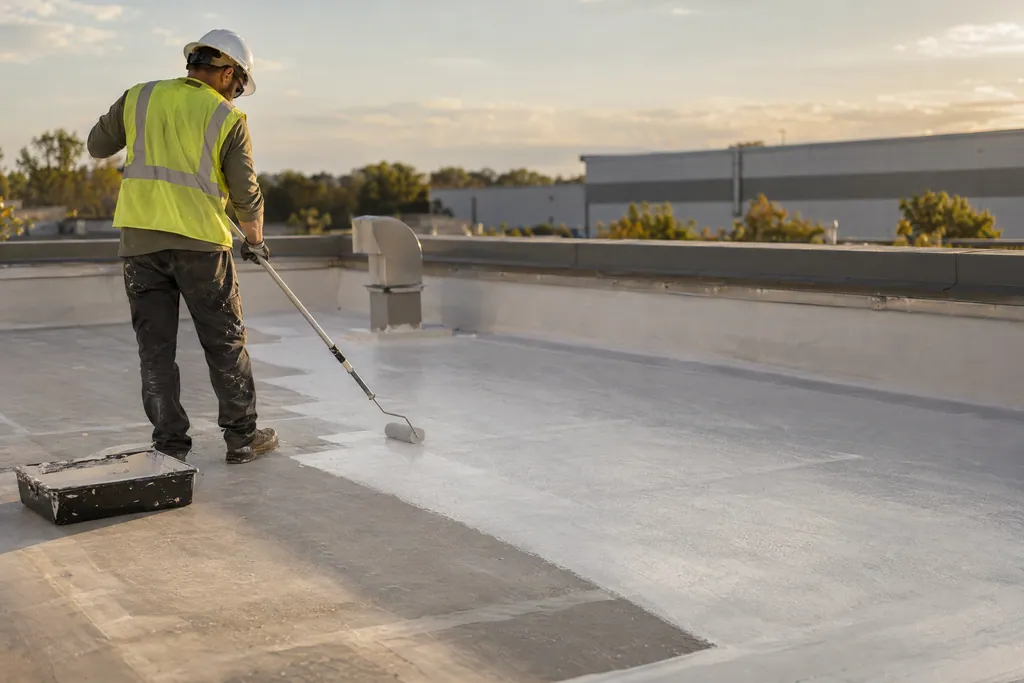
As a Glendale acrylic roof coating contractor, we coat well-drained flat and metal roofs with water-based white acrylic in two coats.
Is This Roof A Fit?
A Glendale acrylic roof coating contractor starts with how fast the roof drains. Acrylic suits roofs that dry out within a day.
Roof Conditions
Acrylic needs a firm base. These conditions get repaired before the first coat.
Your Options
Acrylic systems differ mostly in thickness and reinforcement. Here is how the choices line up.
| Option | Build | Use When |
|---|---|---|
| Two-coat acrylic | Base coat plus topcoat | The roof drains well and is firm |
| Acrylic with fabric | Fabric at seams and walls | Seams or flashings move |
| Primer plus acrylic | Bleed blocker or rust primer first | Cap sheets or rusty metal |
| Acrylic recoat | Wash, repairs, one fresh coat | An earlier acrylic coat is intact |
| Acrylic with silicone spots | Silicone only at lingering puddles | One or two low areas hold water |
Why Coat
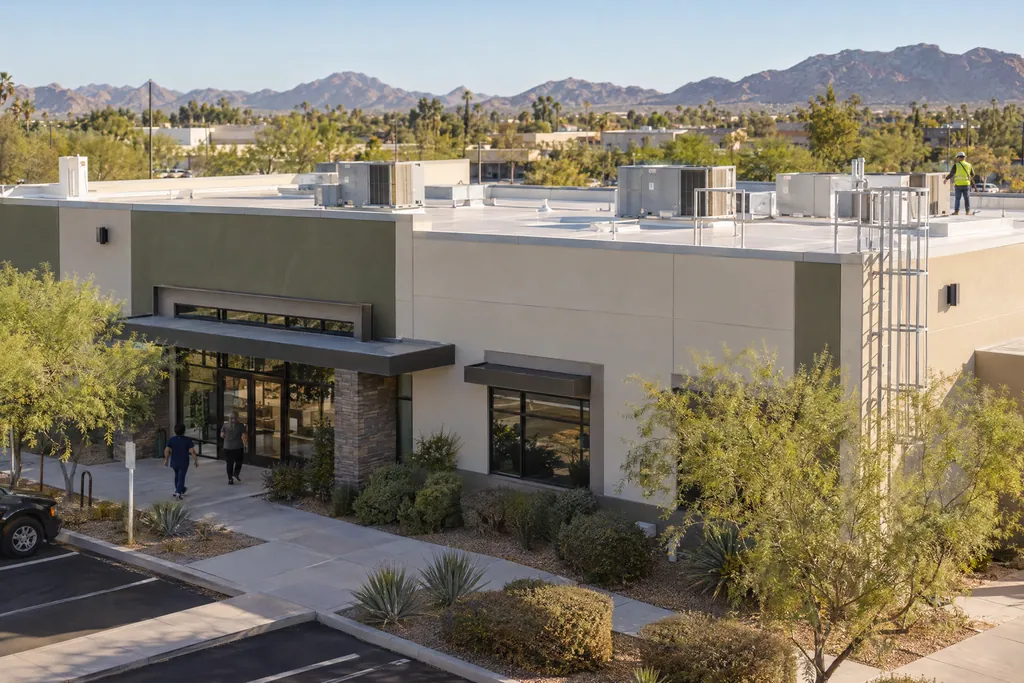
On a roof that drains, acrylic gives a bright surface at a lower cost.
Acrylic usually comes in under silicone on the same roof. Savings grow on larger roofs with good drainage.
Water-based coats suit clinics, offices, and stores that stay open. Rolling keeps overspray away from parked cars.
Wash, repair, and roll another coat when the surface wears. Recoats can be planned well ahead.
Parapet and curb flashing get reinforced as part of the job. Fabric goes where the roof moves most.
White acrylic sends summer heat back off the roof deck. A cooler deck means less heat into the building.
Call and tell us when the roof was last coated. Cooler months keep the work out of the hottest afternoons.
How It Goes
Acrylic cures as its water evaporates, so weather sets the pace along with the roof.
Drainage speed, seams, flashing, and old coatings get checked, plus how long water lasts after rain. Any lasting puddles are marked for silicone instead.
Cracked wall and curb flashing is reinforced with fabric before the field coat. Fabric laps onto the cap and down the field.
Chalk, dust, and loose granules come off so acrylic grips the roof itself. The roof dries fully before any primer goes on.
Bleed blocker or rust primer goes only where the surface calls for it. Test spots confirm the primer blocks bleed.
Base and top coats go on in crossing directions with dry time between. Each coat is checked for thickness before the next.
Related Services
When acrylic is a close call, one of these fits better.
Roofs with lasting puddles near drains do better under silicone.
Silicone coatingSteel roofs need screw and rust work covered on the metal page.
Metal coatingMansards on the same building follow their own condition check.
Shingle coatingQuestions
On roofs that drain, yes. Acrylic reflects sun, rolls on in layers, and recoats easily. Water that sits for days softens it, so ponding roofs get silicone or a drainage fix.
Roof surfaces run far hotter than the air in summer. Each product lists a surface temperature range, and coats that dry too fast can blister, so summer work runs in the mornings.
After loose granules are washed off and a primer is applied where bleed is likely, it can. A test area shows whether the primer blocks the stain first.
The base coat has to be dry and firm before the topcoat. Warm, dry days get there within a day, while cool or humid days stretch it out.
Fabric goes where the roof moves: seams, wall flashing, curbs, and cracks. The open field usually takes coating without it.
Mild, dry winter days work well. Cold nights with dew slow the cure, so coats are timed for the warm part of the day.
Acrylic jobs often sit in the lower part of our $2.50 to $4 per square foot ballpark. Fabric, bleed primer, and flashing repair move a roof higher.
Water-based acrylic has low odor, which makes it a good choice near intakes on clinics and offices. Units close to the work are still shut down or masked while coats go on.
Tell us how the roof drains and when it was last coated.
Leave a name and number, or call (623) 310-0163 now.